
Satellite IoT: Connecting the Unreachable
- hello593537
- Jul 24, 2025
- 3 min read
Updated: Sep 16, 2025
Satellite IoT enables connectivity in remote or inaccessible areas where traditional cellular networks fall short, expanding the reach of the Internet of Things. This innovative technology uses orbiting satellites to transmit data from IoT devices. It provides coverage in locations such as rural farms, offshore sites, and remote industrial locations.
The Importance of Connectivity
At the NATO Summit, country leaders discussed sovereignty, resilience, and security extensively. However, one crucial layer often goes unseen: invisible infrastructure. A staggering 80% of the planet still lacks mobile coverage. Without connectivity, there is no logistics, no defense, and no humanitarian response. Read morehttps://sateliot.space/wp-content/uploads/2025/07/5G-satelital-la-red-invisible-que-defiende-Europa.pdf
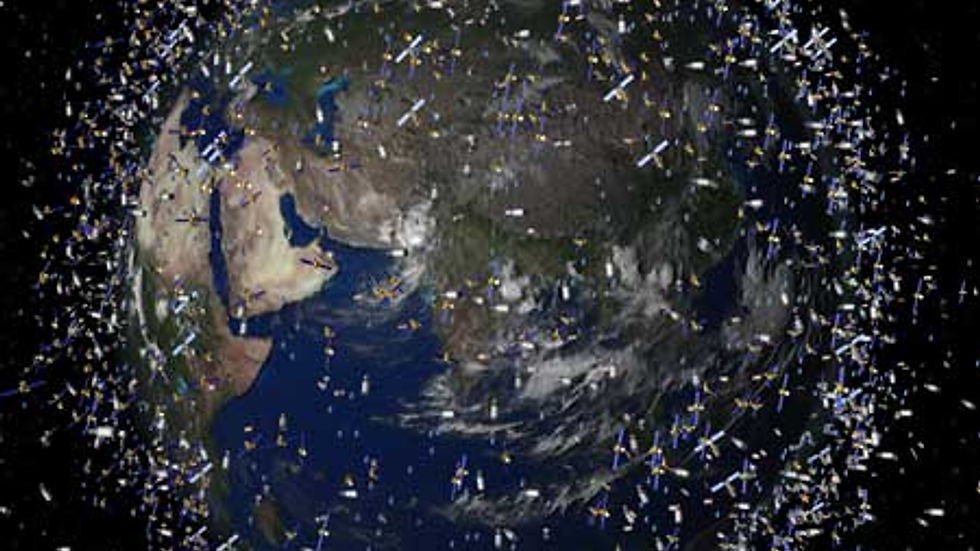
As of June 26, 2025, SpaceX has over 7,875 Starlink satellites in orbit. This number is constantly updated as new satellites are launched and some deorbit. Of the launched satellites, 7,855 are currently operational, according to Jonathan McDowell. SpaceX has launched over 9,200 Starlink satellites since 2019.
How Satellite IoT Works
Data Collection
IoT devices, such as sensors or trackers, collect data or perform specific tasks.
Satellite Transmission
These devices transmit data to satellites using specialized communication protocols like LoRaWAN, NB-IoT, or Sigfox.
Ground Station Reception
Satellites relay the data to ground stations, which process it for end-users.
End-User Access
The processed data is then made accessible through various applications.
Key Advantages of Satellite IoT
Global Coverage
Satellite IoT extends connectivity to areas beyond the reach of traditional cellular networks.
Remote Monitoring
It enables monitoring and control of assets in remote locations, such as agriculture, logistics, and energy sectors.
Safety and Security
This technology improves safety monitoring in challenging environments, such as offshore oil rigs.
Examples of Applications
Agriculture
Smart farming applications utilize satellite IoT for real-time monitoring of soil moisture, temperature, and other environmental factors to optimize crop yields.
Asset Tracking
Tracking containers, vehicles, and other assets in remote areas where cellular coverage is limited.
Environmental Monitoring
Enabling environmental data collection in remote locations for scientific research and climate change studies.
Maritime Operations
Enhancing safety and efficiency in maritime navigation and logistics.
Oil and Gas Exploration
Improving safety and monitoring of operations in remote oil and gas sites.
Utilities
Enabling remote monitoring of infrastructure and resource management.
Comparison with Cellular IoT
Cellular IoT
Relies on existing cellular networks (3G, 4G LTE, or 5G) for connectivity.
Satellite IoT
Operates independently of terrestrial infrastructure, using orbiting satellites.
Coverage
Cellular IoT is limited to areas with cellular network coverage, while satellite IoT offers global coverage.
Latency
Cellular IoT generally has lower latency due to closer proximity to devices, but satellite IoT latency can vary based on the satellite's orbit.
Cost and Power
Cellular IoT is often more cost-effective and uses less power in areas with strong cellular coverage.
Future Trends in Satellite IoT
Integration of Satellite and Cellular
Many new IoT devices are integrating both satellite and cellular communication for seamless connectivity, even in areas with limited or no cellular coverage.
Evolution of LPWAN Technologies
LoRa and other low-power wide-area network (LPWAN) technologies are evolving to connect directly with satellites, enabling broader coverage for battery-efficient IoT deployments.
Increased Satellite Constellations
The deployment of more satellite constellations is expected to enhance satellite IoT capabilities, potentially offering higher throughput and lower latency.
AI and Automation
Artificial intelligence is being integrated into satellite systems to optimize network performance and automate tasks.
Conclusion
In conclusion, Satellite IoT is revolutionizing connectivity in areas that have been traditionally underserved. By leveraging the power of satellites, we can ensure that even the most remote locations can benefit from the Internet of Things. This technology is not just about connecting devices; it's about empowering industries and advancing research. As we look to the future, the potential for Satellite IoT is limitless, and I am excited to see how it will continue to evolve and impact our world.
With the right solutions, we can bridge the connectivity gap and unlock new opportunities for growth and innovation.


