
Understanding LoRaWAN Technology Applications and Its Role in IoT
- hello593537
- 4 days ago
- 4 min read
In the rapidly evolving world of the Internet of Things (IoT), connectivity is king. Among the many technologies powering this revolution, LoRaWAN stands out as a game-changer. It offers a unique blend of long-range communication, low power consumption, and robust security, making it ideal for industries and researchers seeking custom IoT solutions. Today, I want to take you on a journey through the fascinating landscape of LoRaWAN technology applications and how it is shaping the future of connected devices.
What is LoRaWAN and Why Does It Matter?
LoRaWAN, short for Long Range Wide Area Network, is a wireless communication protocol designed specifically for IoT devices. Unlike traditional Wi-Fi or cellular networks, LoRaWAN operates on unlicensed radio spectrum bands, enabling devices to communicate over distances of several kilometres with minimal energy use.
Imagine a sensor in a remote agricultural field sending data about soil moisture or temperature back to a central system without needing frequent battery changes. That’s the power of LoRaWAN. It’s designed to connect devices that need to send small amounts of data intermittently, making it perfect for smart agriculture, environmental monitoring, and asset tracking.
The protocol’s architecture consists of end devices (sensors or actuators), gateways that relay messages, and a network server that manages data flow. This layered approach ensures scalability and security, which are critical for industrial and research applications.

Exploring LoRaWAN Technology Applications
LoRaWAN technology applications are as diverse as the industries adopting them. Here are some of the most impactful use cases that demonstrate its versatility:
1. Smart Agriculture
Farmers can monitor soil conditions, weather, and crop health in real-time. LoRaWAN sensors scattered across fields transmit data to a central hub, enabling precision farming. This reduces water usage, optimises fertiliser application, and increases crop yields.
2. Environmental Monitoring
From tracking air quality in urban areas to monitoring water levels in flood-prone regions, LoRaWAN sensors provide critical data that helps researchers and policymakers make informed decisions. The technology’s long range and low power consumption make it ideal for deploying sensors in hard-to-reach locations.
3. Asset Tracking and Logistics
Businesses can keep tabs on valuable assets, vehicles, or shipments across vast areas. LoRaWAN-enabled trackers send location updates without draining batteries quickly, ensuring continuous visibility and security.
4. Smart Cities
LoRaWAN supports smart lighting, waste management, and parking solutions. Cities can reduce energy consumption and improve public services by integrating LoRaWAN sensors into their infrastructure.
5. Industrial Automation
Factories and warehouses use LoRaWAN to monitor equipment health, track inventory, and automate processes. This leads to increased efficiency, reduced downtime, and safer working environments.
Each of these applications benefits from LoRaWAN’s ability to connect devices over long distances while maintaining low operational costs. The technology’s adaptability means it can be tailored to meet the specific needs of different sectors.
How LoRaWAN Enhances IoT Solutions
The true strength of LoRaWAN lies in its design principles that align perfectly with the demands of IoT:
Long Range: Devices can communicate over distances up to 15 km in rural areas and 2-5 km in urban settings.
Low Power Consumption: Devices can operate for years on a single battery, reducing maintenance costs.
Secure Communication: End-to-end encryption ensures data integrity and privacy.
Scalability: Networks can support thousands of devices without congestion.
Cost-Effectiveness: Operating on unlicensed spectrum reduces infrastructure expenses.
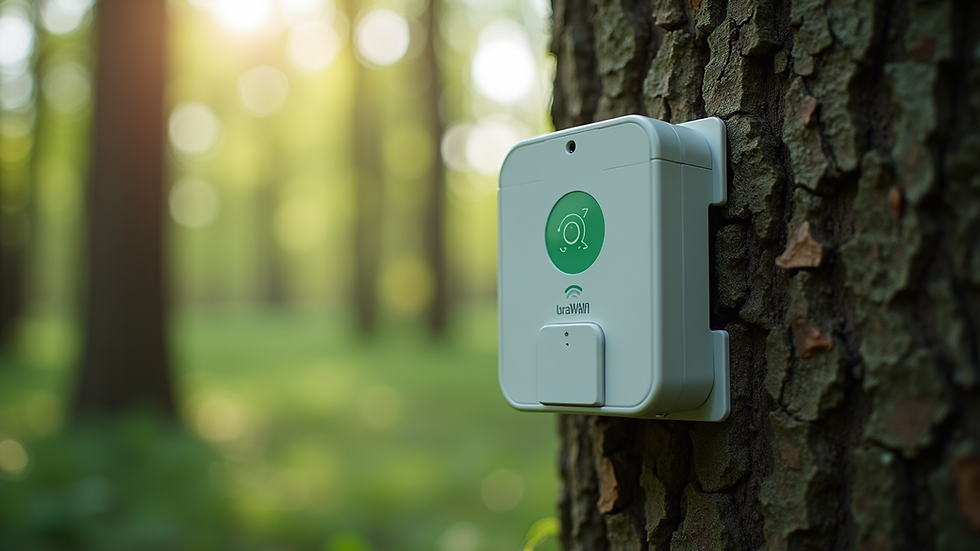
These features make LoRaWAN an excellent choice for projects that require reliable, low-cost, and energy-efficient connectivity. For example, in Northern Ireland’s unique natural environment, researchers can deploy LoRaWAN sensors to study ecosystems without disturbing them, while businesses can test smart technologies in real-world conditions.
If you want to explore more about how to get started with LoRaWAN, you can find valuable resources and community support lorawan online.
Practical Tips for Implementing LoRaWAN in Your Projects
If you’re considering integrating LoRaWAN into your IoT solutions, here are some actionable recommendations to ensure success:
Assess Your Coverage Needs
Understand the geography and environment where devices will be deployed. Urban areas may require more gateways due to signal obstruction, while rural areas benefit from LoRaWAN’s long range.
Choose the Right Hardware
Select sensors and gateways compatible with your application’s data requirements and power constraints. Look for devices certified by the LoRa Alliance for guaranteed interoperability.
Plan for Scalability
Design your network to accommodate future growth. LoRaWAN networks can support thousands of devices, but proper planning avoids bottlenecks.
Secure Your Network
Implement strong encryption and authentication protocols. Regularly update firmware to protect against vulnerabilities.
Leverage Data Analytics
Collecting data is just the first step. Use analytics tools to derive actionable insights that improve operations and decision-making.
Test in Real-World Conditions
Use Northern Ireland’s diverse environments as a testing ground to validate your solutions under different conditions before full deployment.
By following these steps, you can harness the full potential of LoRaWAN technology applications and create IoT solutions that are both innovative and reliable.
The Future of LoRaWAN and IoT Connectivity
Looking ahead, LoRaWAN is poised to play an even more significant role in the IoT ecosystem. As industries demand smarter, more connected solutions, the technology’s ability to provide secure, long-range, and low-power communication will be invaluable.
Emerging trends include integration with 5G networks, enhanced geolocation capabilities, and expanded use in smart grids and healthcare monitoring. The ongoing development of LoRaWAN standards ensures that the technology remains adaptable and future-proof.
For businesses and researchers aiming to lead in IoT innovation, embracing LoRaWAN technology applications offers a pathway to smarter, more efficient, and sustainable operations. By leveraging this technology, we can unlock new possibilities and drive progress across sectors.
Embracing LoRaWAN means stepping into a world where connectivity knows no bounds, and the potential for innovation is limitless. Whether you’re monitoring crops in a remote field or automating a factory floor, LoRaWAN provides the foundation for a smarter, more connected future.


